
Runway's Interactive World Simulation: What It Means for Short-Form Video Creators
Runway's Project Continuum turns static media into interactive real-time world simulations. What the October 1, 2026 demo actually shows, what is still research preview, and what short-form creators can ship today.
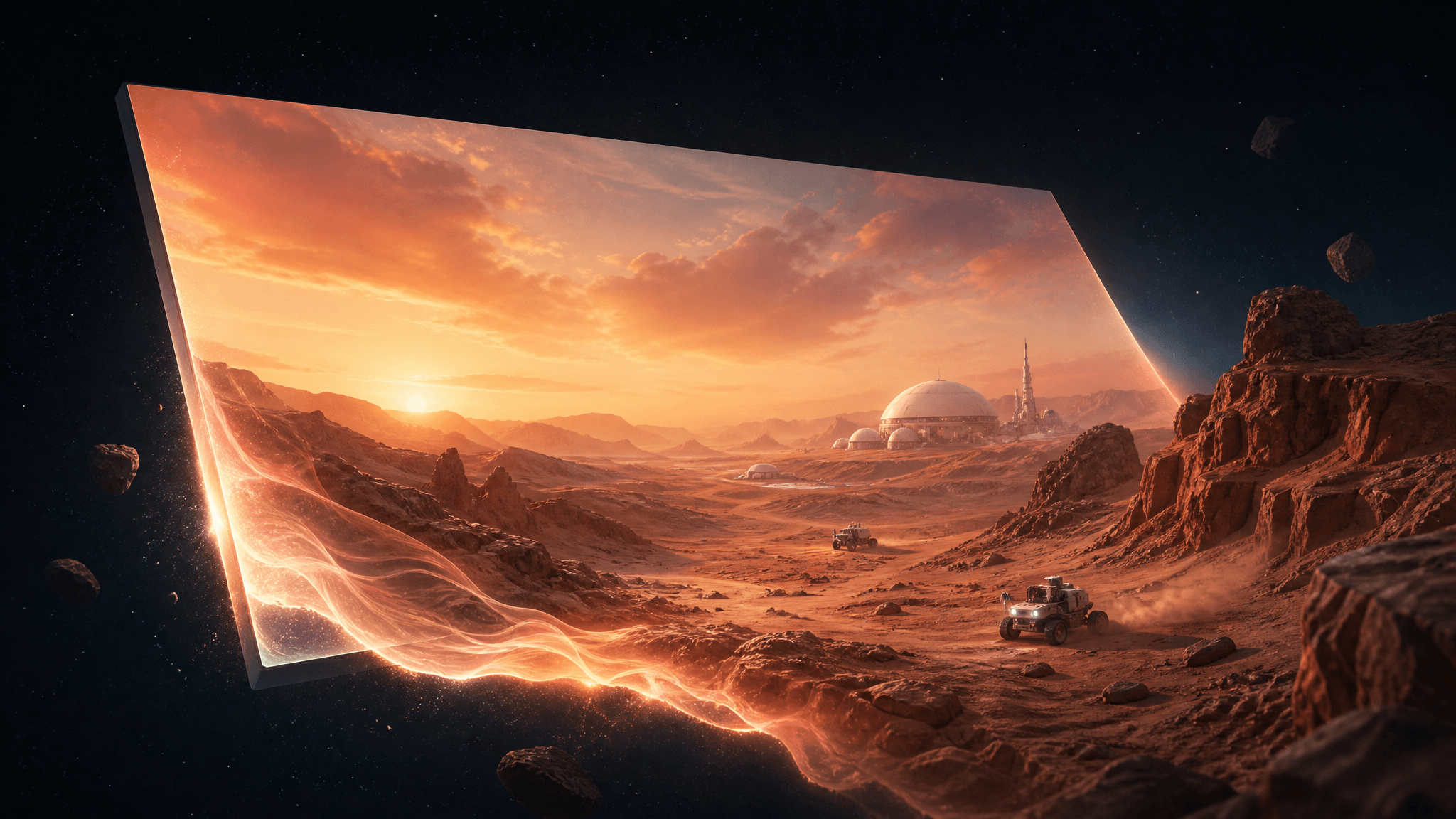
On October 1, 2026, Runway posted a twenty-second demo with a loaded caption: "Expand any media into an interactive real-time world simulation. Turn a fixed experience into immersive multi-modal simulations for people and agents." The clip shows Project Continuum, a research application from Runway Labs that treats a video interface not as a finished file but as a live scene you can drag, resize, and step inside — in real time.
For short-form creators, the announcement points at a real direction: generated media that stays editable and explorable after the "render" step. It is also exactly what the disclaimer says — a research demonstration with no release date. Here is what Runway actually showed, how it fits the company's world-model research line, and what you can realistically do with it this month.
Key takeaways
- Project Continuum is Runway Labs' operating-system-style research app built on real-time video interfaces — a demo, not a product you can sign up for.
- The same research line produced GWM Worlds 2 (steerable interactive worlds, research preview) and Solaris (interfaces rendered frame by frame) earlier in September.
- The practical implication for creators: media may shift from one-shot deliverables to steerable scene material you can re-frame and harvest repeatedly.
- Today's publish-ready short-form is still asynchronous generation. Nothing about this announcement changes what you can ship right now.
What Runway actually announced
The October 1 thread is the primary source, and it is worth reading precisely. Runway's main post describes expanding "any media" into "an interactive real-time world simulation" for "people and agents." Two follow-up posts in the same thread describe the interface behaviors behind the demo:
- Portals — draggable windows with soft, dream-like edges that mark where generated content begins; one sits "alongside your content" on the page.
- Resizable video interfaces — "Resize any video interface and the model recomposes the scene with spatial awareness. Click inside to interact with it directly, in real time."
- Visual Thinking — described as "a new harness for coding agents": a real-time video model visualizes each step and tool call as an agent works, so you can watch an autonomous workflow happen.
- Interactive worlds — in the demo, a suggested Mars outpost opens as a full-screen scene that responds to clicks; onlookers in the replies specifically flagged that the scene improvised planet-appropriate details in real time.
Runway Labs — the company's internal incubator for experimental uses of generative video, announced in March 2026 and led by co-founder Alejandro Matamala Ortiz — positions Continuum as "a new operating system research application built around real-time video interfaces." The prototype has a prompt bar, tabs for previous tasks, and a drawer for reopening portals.
What it does not have is availability. No download, no price, no public release date has been announced. Runway's own demo post and the Labs framing both present Continuum as an early look, and independent summaries fact-checked in the days after the demo confirm nothing beyond the demonstration has shipped.
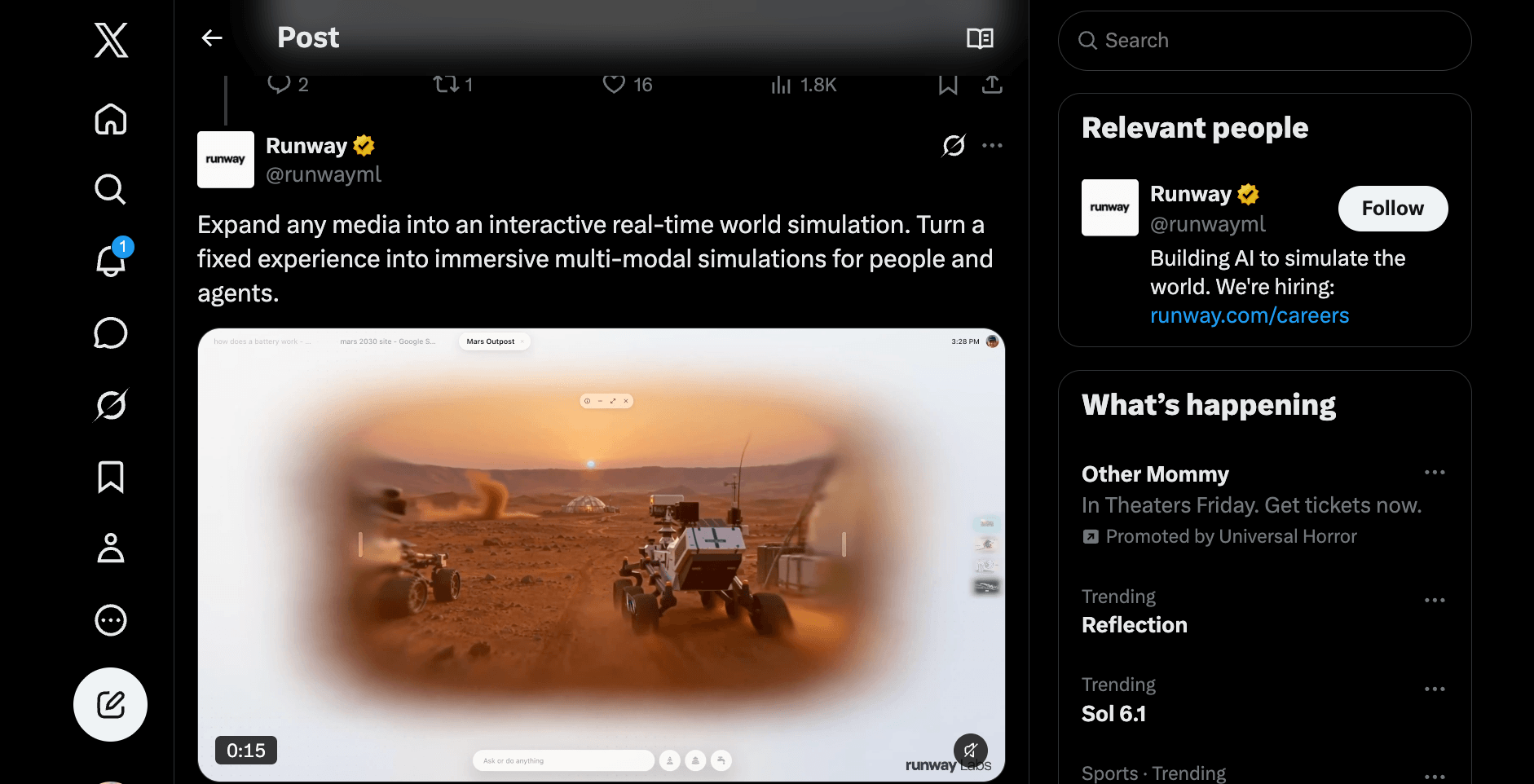
Runway's announcement post on X, October 1, 2026. Source: @runwayml on X
The research line behind the demo
Continuum did not appear from nowhere. Runway's stated research mission is "building general-purpose multimodal simulators of the world," and the past year of releases reads as a deliberate stack:
- GWM-1 — Runway's General World Model, described by the company as a major step toward universal simulation.
- GWM Worlds 2 (research preview, September 3, 2026) — you define a world's environment, subjects, visual style, physical rules, and ambience, then steer it with free-form text actions and continuous camera motion. Runway's paper page specifies continuous 720p video at 24 fps and 48,000 Hz audio that responds as you explore.
- Solaris (paper, September 1, 2026) — an interface world model that generates interactive UI directly, frame by frame, in response to user actions, treating mouse input as a conditioning signal. Runway describes the division of labor in Continuum-style interfaces this way: a language model interprets what you ask and decides how the scene should behave; Solaris renders it at interactive speed, building on the Gen-4.5 video model.
- Runway Characters (July 19, 2026) — a single reference image becomes a real-time conversational video agent, with about 1.75 seconds of turnaround after you stop speaking.
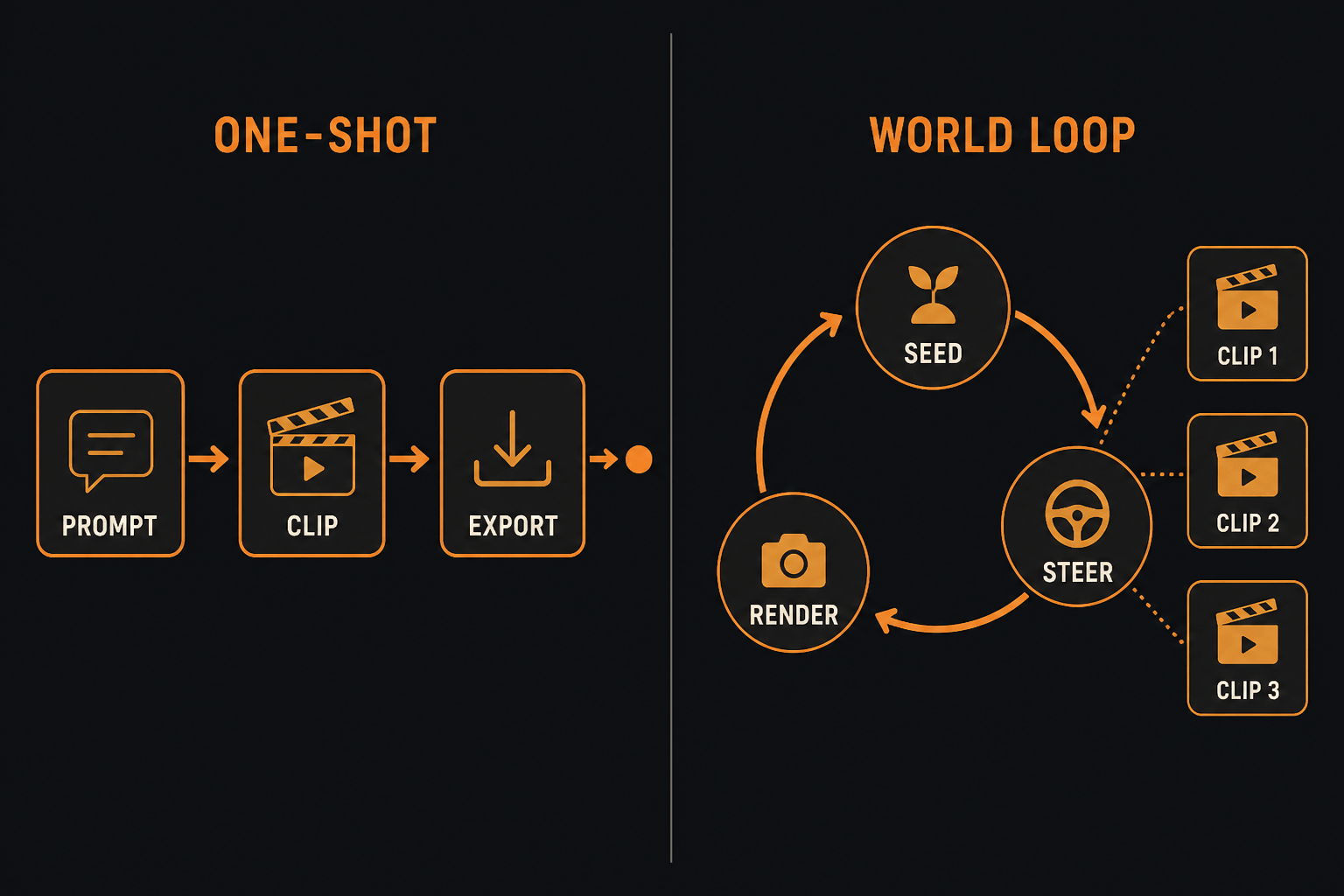
The pattern across all four: generation is no longer a batch job that produces a file. It is a loop that keeps rendering while you interact. That loop is what makes "expand this clip into a world" technically possible — and it is why the demo emphasizes real-time recomposition rather than output quality.
From one-shot clips to steerable worlds
None of this is a shipped creator feature yet, so the useful question is what the direction implies. Treating the announcement as a signal, three shifts seem worth planning around — clearly labeled here as analysis, not capabilities:
A generated scene becomes reusable material, not a deliverable. Today, a generated clip is usually spent the moment you export it: want a different angle, a longer take, or a matching cutaway, and you generate again from scratch and hope the results match. In a world-model workflow, the scene persists. The same Mars outpost that answered clicks in Continuum's demo can, in principle, be re-steered — new camera move, new moment, new subject — and each pass yields another usable shot. One seed, many assets.
Interactive formats stop being a niche. Branching stories, "choose what happens next" clips, explorable product scenes — these exist now but require deliberate production. When the medium natively supports click-to-explore scenes (and when platforms support the playback side), the marginal cost of an interactive version of a short drops toward the cost of the linear one.
The craft moves up a level. Notice the vocabulary in GWM Worlds 2's description: environment, subjects, visual style, physical rules, ambience. That is art direction, not prompt writing. Creators who get good at specifying consistent worlds — and at judging when a generated world breaks its own rules — will be the ones who can use these tools the day they become practical.
What is still preview-only
Before restructuring any workflow around this, the caveats — most of them from Runway itself:
- You cannot use Continuum yet. There is no public availability, pricing, or release date. Everything above describes a demonstration.
- GWM Worlds 2 is a research preview, not a production tool, and Runway has not announced general commercial terms for it.
- Runway names the open problems itself. For Solaris-style generated interfaces, the company flags legible text, factual grounding, consistency during long sessions, and accessibility integration as unresolved. Those are precisely the properties a creator's audience notices first when a scene falls apart mid-clip.
- Demos are cherry-picked by nature. A twenty-second clip is a best case. Until you can run the thing yourself, treat real-time recomposition quality as unverified — including by us; we have not run Continuum, GWM Worlds 2, or Solaris.
The reasonable posture is the one experienced creators already take with frontier announcements: watch the direction, learn the vocabulary, keep your production pipeline on tools that exist.
What you can actually ship today
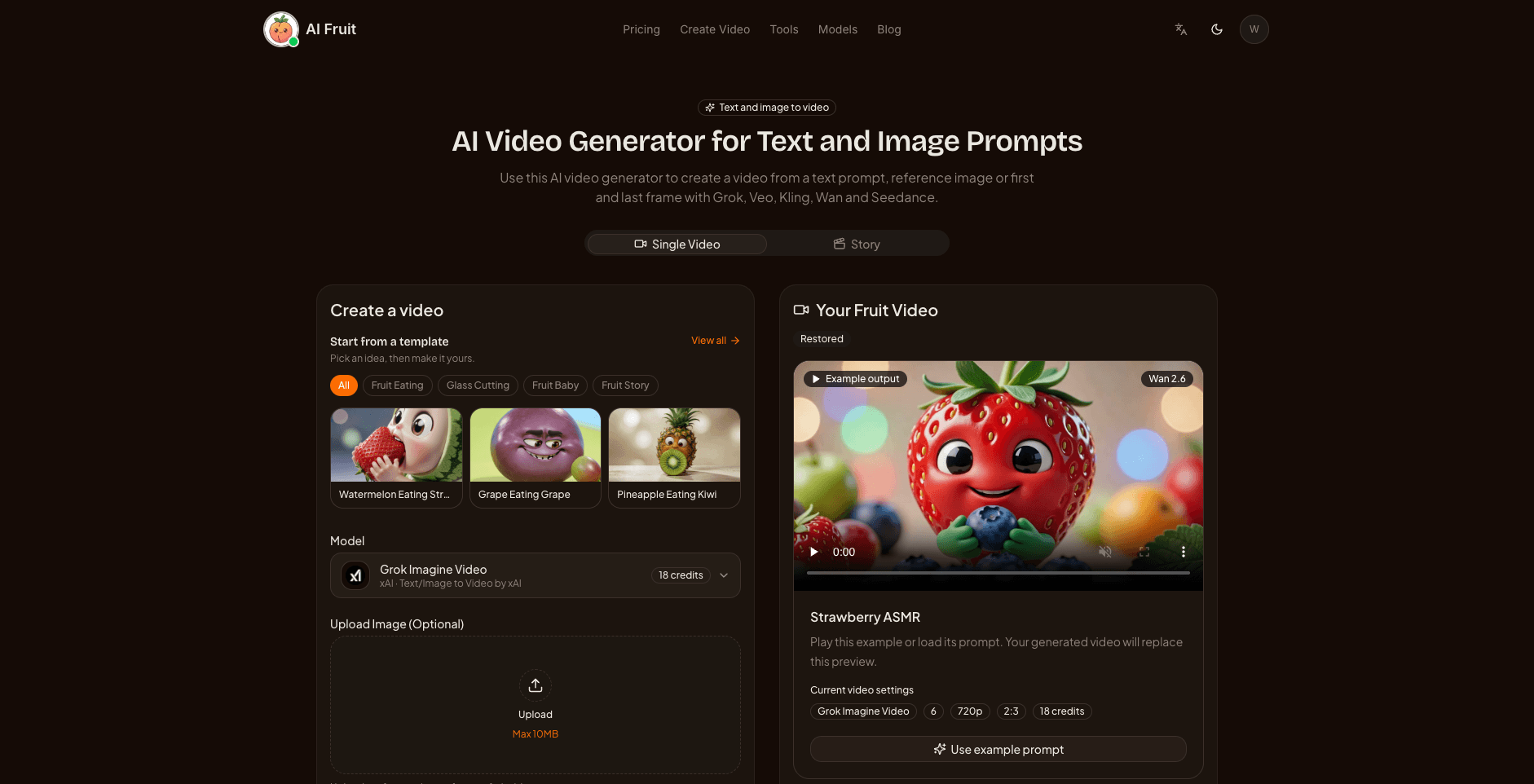
Publish-ready short-form remains an asynchronous loop: brief, generate, review, post. The practical levers are unchanged — picking the right model for the shot, seeing the settings and credit cost before you spend, and keeping context consistent across a series of clips. That is the gap AI Fruit (the platform behind this blog) works on: fruit-style short-form generation with model choice and costs visible up front, plus a Story workflow that preserves characters and scene context across clips without pretending to be a timeline editor. If you want to see what that looks like, the AI video generator is the starting point.
The bottom line
Runway's October 1 announcement is a credible preview of where generated video goes: from rendering clips to simulating places you keep working inside. The world-simulation line — GWM-1, GWM Worlds 2, Solaris, now Continuum — is advancing fast enough that short-form creators should pay attention, learn the world-description skills it rewards, and wait for actual availability before changing anything. Your posting schedule this month does not need to change; your mental model of what a "video file" is, probably just did.